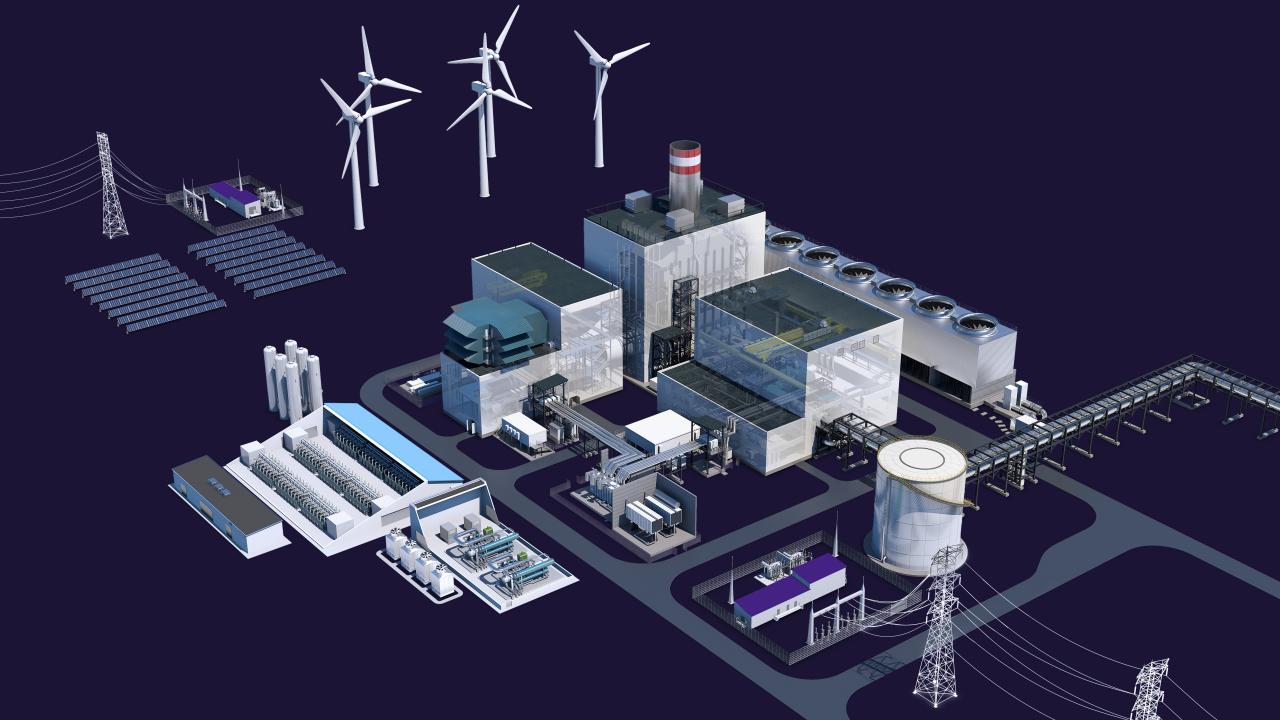
The electricity grid is under more stress than at any point in its 140-year history. Surging demand from data center construction, building electrification, and electric vehicle adoption is colliding with aging infrastructure, rising costs, and the intermittency challenges of renewable energy. The traditional answer — build more power plants, run more transmission lines — is too slow, too expensive, and increasingly incompatible with decarbonization goals. Enter the AI-powered Virtual Power Plant (VPP): a software-orchestrated fleet of distributed energy resources that can deliver the flexibility, speed, and scale the grid desperately needs.
According to a U.S. Department of Energy analysis, VPPs could meet 10% to 20% of U.S. peak grid needs in the coming years and save utility customers roughly $10 billion in annual costs. That is no longer a theoretical projection. Companies like Voltus, Sunrun, and Piclo are already aggregating gigawatts of behind-the-meter resources. Regulatory frameworks like FERC Order 2222 are tearing down market barriers. And artificial intelligence is the connective tissue making it all work at the millisecond timescales the grid demands.
What Is a Virtual Power Plant — and Why AI Changes Everything
A Virtual Power Plant is not a single facility. It is a cloud-orchestrated aggregation of thousands — sometimes millions — of distributed energy resources (DERs) that collectively behave like a traditional power plant. These DERs include rooftop solar panels, home and commercial battery systems, V2G-capable electric vehicles, smart thermostats, heat pumps, industrial loads that can be curtailed on demand, and increasingly, vehicle-to-home (V2H) systems capable of bidirectional energy flow.
What transforms a loose collection of gadgets into a dispatchable power resource is AI-driven orchestration. Machine learning models ingest real-time data streams — weather forecasts, grid frequency, wholesale energy prices, individual device state-of-charge, building occupancy patterns, EV departure schedules — and compute optimal dispatch decisions for every enrolled asset, every few seconds. The result is a resource that can ramp up or down faster than a gas turbine, absorb solar overgeneration at midday, inject stored energy during evening peaks, and provide ancillary services like frequency regulation that historically required dedicated spinning reserves.
The AI layer is what differentiates modern VPPs from the simple demand-response programs of the 2010s. Traditional demand response asked large industrial customers to curtail load a few times per year. AI-powered VPPs coordinate millions of small residential and commercial assets continuously, extracting value from each one without degrading comfort or device lifespan. They turn every AI-managed smart home into a node on a living, breathing grid-edge network.
The Data Center Energy Crisis: A $10 Billion Problem
The most acute driver of VPP growth is the explosion in data center construction fueled by the AI boom. Hyperscale data centers can consume hundreds of megawatts each — equivalent to a small city. Across the PJM Interconnection territory alone (13 states from Virginia to Illinois), data center demand is the primary driver of spiking electricity bills for more than 65 million residents. Similar pressures are building in Georgia, Texas, and the Midwest.
The grid simply cannot build fast enough. New transmission lines take 5–10 years to permit and construct. Gas peaker plants face environmental opposition and stranded-asset risk. Data center developers, meanwhile, want to connect now. Voltus’s “bring your own capacity” program offers a radical alternative: data center operators pay VPP aggregators to reduce demand elsewhere on the grid, freeing up capacity for the data center to connect without waiting for new infrastructure. Dana Guernsey, Voltus CEO, puts it bluntly: “The hyperscalers and data center developers are eager to fund this. It’s more affordable, it’s faster, and it’s an investment back into the communities.”
The numbers back her up. Voltus — ranked the #1 aggregator by Wood Mackenzie — now manages over 7.5 GW of demand-response capacity across North America. Cloverleaf Infrastructure, planning a 3.5 GW data center campus in Wisconsin, is already working with VPP providers rather than waiting years for traditional grid buildout. Brian Janous, Cloverleaf’s chief commercial officer, explains the logic: “The right way to serve data center load quickly, at scale, and less expensively is to leverage the existing resources on the grid as efficiently as possible.”
FERC Order 2222: Opening Wholesale Markets to DER Aggregation
None of this would be possible without the regulatory groundwork laid by FERC Order No. 2222, issued in September 2020. This landmark rule requires all U.S. regional grid operators (ISOs and RTOs) to allow distributed energy resources to participate in wholesale capacity, energy, and ancillary services markets through aggregations. Before Order 2222, a 10 kW home battery could not bid into the PJM capacity market. Now, an aggregator can bundle thousands of such batteries into a resource that meets the 100 kW minimum participation threshold and competes directly against gas peakers and grid-scale storage.
The order addresses critical technical details: locational requirements for DER aggregations, bidding parameters, metering and telemetry standards, and coordination protocols between grid operators, aggregators, distribution utilities, and retail regulators. It also explicitly prevents retail regulators from broadly blocking DER participation in wholesale markets — a crucial safeguard that ensures market access is not gated by incumbent utility interests.
Implementation has been uneven. PJM and the Southwest Power Pool are furthest along, driven partly by the data center demand surge. CAISO in California and NYISO in New York are making progress but face grid-specific complications. For VPP operators, the message is clear: market access is expanding, but each ISO territory requires tailored aggregation strategies, telemetry integration, and compliance processes. This is where AI-powered platforms shine — they can adapt dispatch logic to the specific market rules, price signals, and grid constraints of each territory automatically.
Flexibility Marketplaces: The New Grid Operating System
While FERC Order 2222 opens wholesale markets, a parallel revolution is unfolding at the distribution level through flexibility marketplaces — platforms that allow utilities to procure grid relief from distributed resources on a competitive, dynamic basis.
The most ambitious example launched in late 2025, when National Grid opened a marketplace in Massachusetts powered by UK-based startup Piclo. The concept is elegant: National Grid publishes its specific grid constraints — a 3 MW summer peak at substation X, an 800 kW winter overload on circuit Y — and VPP aggregators, battery owners, EV fleet operators, and building managers bid resources to solve them. Piclo then matches offers into optimal portfolios, combining megawatts across providers and time windows.
Josh Tom, National Grid’s director of energy transition solutions, contrasts this with the old model: “The 2010s version is, you’ve got big players, a single project for the entire need. It’s an old-school utility procurement. It’s a closed system, not accessible to everyone. And it can take a long time.” Piclo’s marketplace, by contrast, has already registered 1 GW of DER flexible capacity across the US, with participants ranging from Sunrun (residential solar and batteries) to Enel X (commercial demand response).
These “non-wires alternatives” (NWAs) directly reduce the need for costly transformer and substation upgrades — the single biggest driver of rising U.S. electricity bills. A California study found that strategically deployed VPPs could save $13.7 billion in distribution grid upgrade costs by targeting congested “sweet spots” on the network. Massachusetts, Connecticut, Illinois, and North Carolina are all moving toward similar flexibility procurement models, creating a patchwork of new market opportunities for VPP operators.
EV Charging Infrastructure as the Largest Untapped VPP Asset
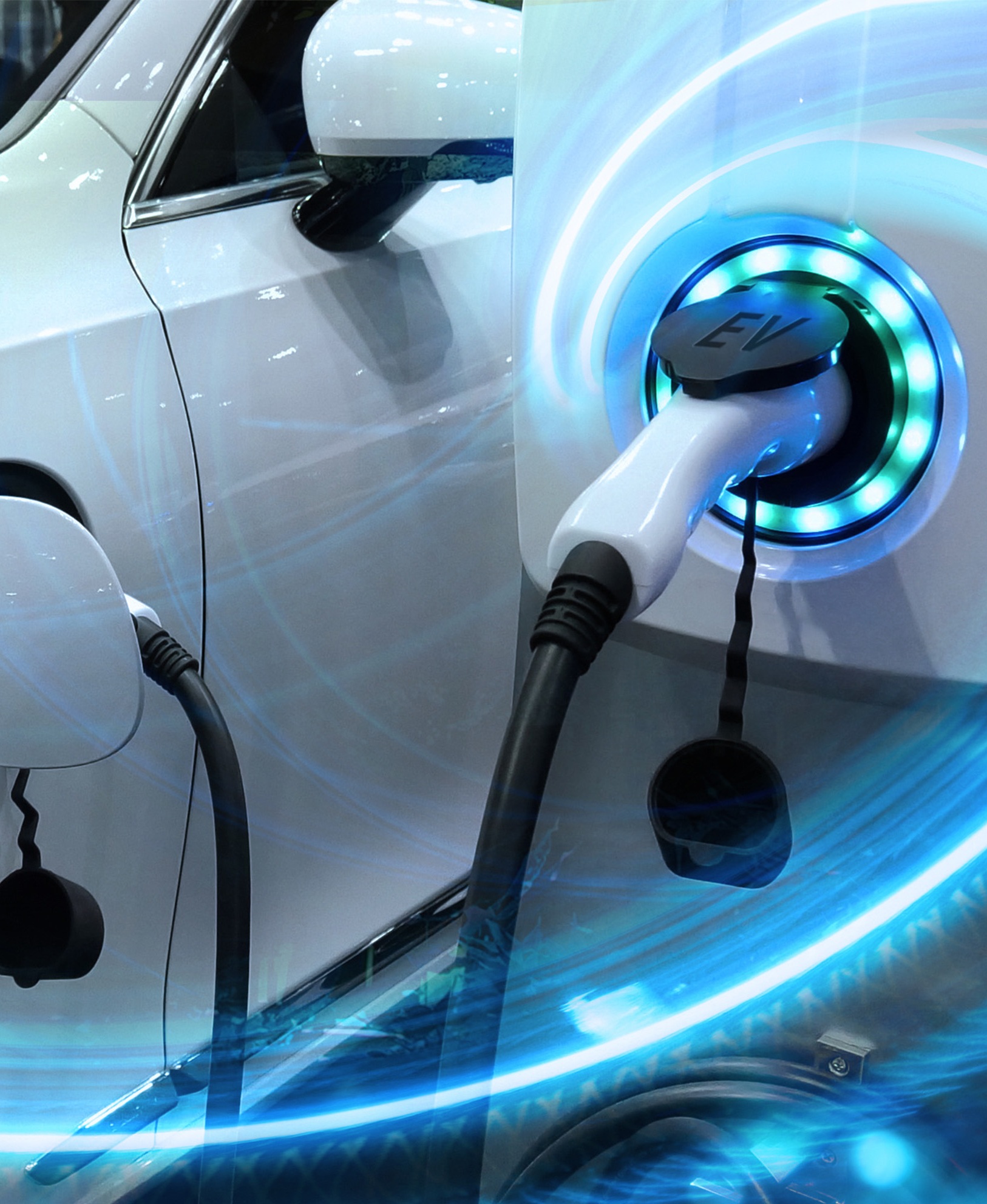
Of all the DER categories feeding into VPPs, EV charging infrastructure may be the most underutilized — and the highest-potential. By 2030, an estimated 145 million EVs will be on roads worldwide, each carrying 50–100+ kWh of battery capacity. The vast majority sit parked and idle more than 95% of the time. When those vehicles are connected to smart, bidirectional chargers running IEC 63584-210 (OCPP 2.1), they become dispatchable grid assets.
OCPP 2.1’s new functional blocks for bidirectional charging and DER control are purpose-built for VPP integration. A CSMS (Charging Station Management System) implementing IEC 63584-210 can receive dispatch signals from a VPP aggregator, negotiate energy export with each connected vehicle based on its departure time and minimum charge requirement, meter the bidirectional energy flow, and settle the transaction — all through standardized, interoperable protocols. No proprietary extensions needed.
The combination of ISO 15118-20 at the vehicle-charger interface and OCPP 2.1 at the charger-backend interface creates a complete communication stack from VPP orchestrator to vehicle battery. Fleet depots — bus fleets, delivery vans, corporate car parks — are particularly attractive because they offer predictable schedules, high aggregate capacity, and concentrated grid connection points. OCPP’s evolution toward universal interoperability ensures that fleet operators are not locked into a single hardware vendor.
Consider a depot with 50 electric buses, each with a 300 kWh battery. That is 15 MWh of storage — equivalent to a small grid-scale battery installation — available every night. An AI-powered VPP platform can optimize charging schedules to fill batteries during off-peak hours (2–5 AM) when wholesale prices are lowest, then export stored energy during the evening peak (5–8 PM) when prices are highest. The fleet operator earns revenue from arbitrage and ancillary services while still having fully charged buses ready for the morning route. This is not hypothetical — it is the exact use case that V2G technology and the new IEC 63584-210 standard were designed to enable.
How AI Optimizes VPP Dispatch in Real Time
The technical challenge of orchestrating thousands of heterogeneous DERs across a distributed grid is formidable. A VPP aggregator managing 50,000 residential batteries, 10,000 smart thermostats, 5,000 EV chargers, and 2,000 commercial HVAC systems must solve a multi-objective optimization problem every few seconds: maximize revenue from energy and ancillary service markets, minimize device degradation, respect user comfort constraints, and maintain grid reliability — all while handling real-time uncertainty in weather, prices, and device availability.
Modern VPP platforms use a combination of AI techniques to tackle this:
Reinforcement learning (RL) trains dispatch agents through millions of simulated grid scenarios, learning policies that maximize long-term value rather than greedy short-term gains. RL is particularly effective for battery dispatch, where charge-discharge decisions today affect state-of-charge availability tomorrow.
Graph neural networks (GNNs) model the physical topology of the distribution grid, capturing power flow constraints, voltage sensitivities, and transformer loading limits that a flat dispatch model would miss. This is critical for flexibility marketplaces where VPPs must deliver relief at specific grid locations.
Federated learning enables model training across thousands of edge devices without centralizing sensitive customer data. A smart thermostat learns occupancy patterns locally, shares only model updates (not raw data) with the VPP platform, and receives improved dispatch policies in return. This architecture addresses both cybersecurity concerns and data privacy regulations like GDPR.
Probabilistic forecasting with transformer-based neural networks provides uncertainty-aware predictions of solar generation, wind output, building load, and EV plug-in times, enabling risk-adjusted dispatch that maintains reliability margins even in tail scenarios.
The result: AI-optimized VPPs routinely achieve 95%+ dispatch accuracy and can ramp faster than any conventional generation asset. For grid operators, this makes VPPs a bankable resource that can be counted on for capacity planning — a requirement for serious participation in wholesale markets under FERC Order 2222.
Business Models: Who Pays and Who Profits
The VPP value chain is creating multiple revenue vectors for different participants:
Homeowners and small businesses earn $200–$1,000+ annually by enrolling batteries, EVs, and smart appliances in VPP programs. Duke Energy in North Carolina already rewards homes that let it tap their batteries and is expanding incentives to businesses and local governments. Massachusetts’ ConnectedSolutions program has delivered hundreds of megawatts of grid relief during summer heat waves.
VPP aggregators earn wholesale market revenues (capacity, energy, ancillary services) and distribution-level NWA payments from utilities. Voltus’s business model layers data center “bring your own capacity” fees on top of traditional VPP revenue streams, creating a premium channel. The aggregator’s margin comes from the spread between what it pays device owners and what it earns in markets — a spread that AI optimization widens.
Utilities benefit by deferring billions in capital expenditure on substation upgrades and transmission buildout. National Grid’s Massachusetts marketplace explicitly frames flexibility procurement as a cheaper, faster alternative to traditional “wires” investment. Regulated utilities that earn guaranteed profits on grid infrastructure investment face a structural tension here, but state regulators are increasingly mandating non-wires alternative evaluations before approving capital projects.
Data center developers gain faster grid interconnection and avoid the 5–7 year wait for traditional infrastructure buildout. The willingness to pay is high: “Our view is that the market is still undervaluing capacity relative to the willingness to pay for a data center to go faster,” says Cloverleaf’s Brian Janous. This creates a premium capacity market where VPPs serve as a bridge resource until permanent infrastructure is built.
Fleet operators and CPOs earn incremental revenue by making their V2G-enabled charging infrastructure available to VPP platforms. With IEC 63584-210 providing the standardized communication layer, a Charge Point Operator can enroll a depot across multiple VPP programs and market territories without hardware modifications — pure software-layer integration.
The 2026–2030 VPP Roadmap
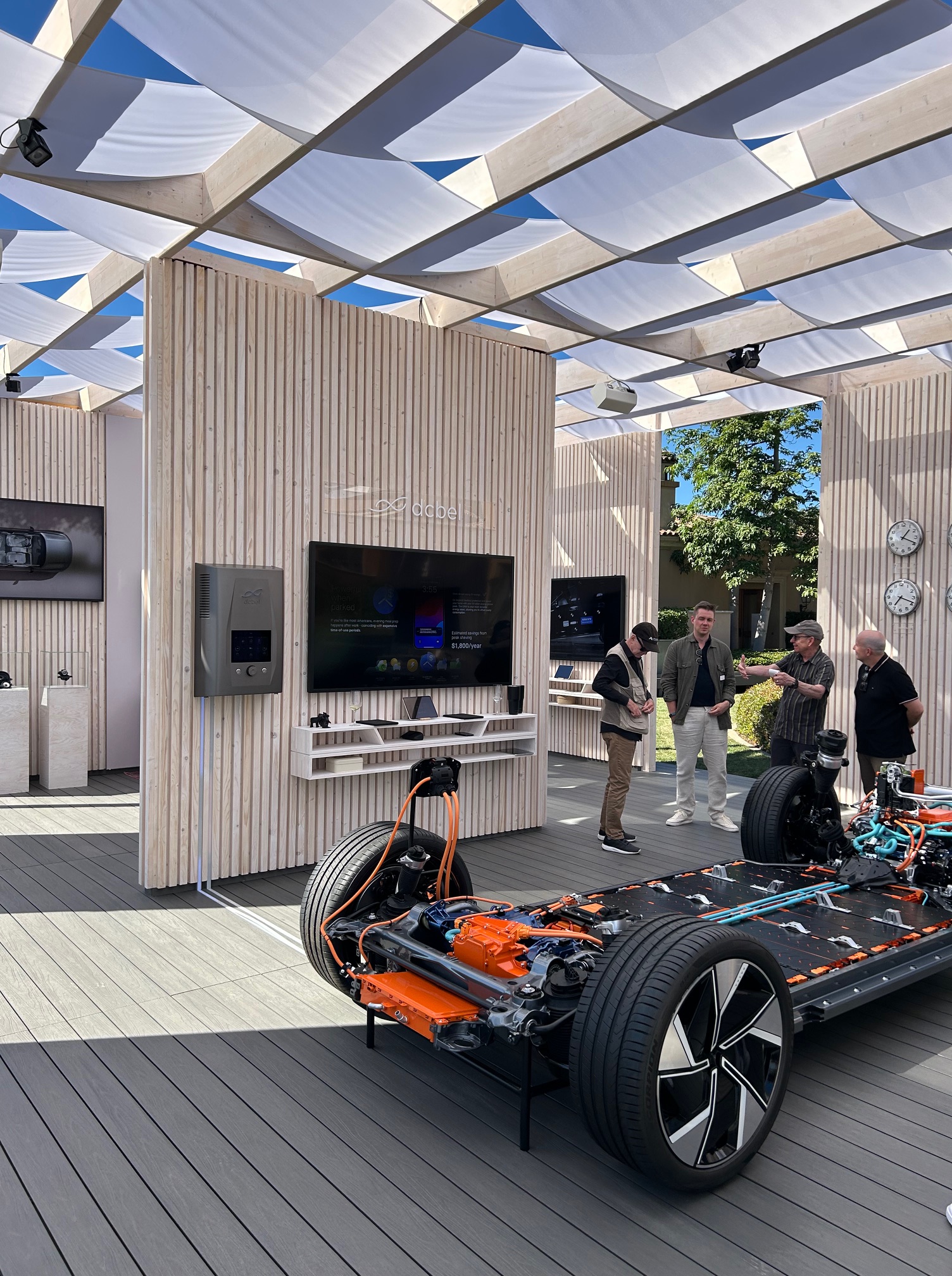
The next four years will determine whether VPPs remain a niche flexibility tool or become a foundational pillar of the electricity system. Several forces are converging to accelerate the latter outcome:
FERC Order 2222 implementation matures. As PJM, CAISO, NYISO, MISO, and SPP finalize DER aggregation tariffs, VPPs gain access to the largest energy markets in the world. The legal and procedural barriers that have slowed adoption are systematically being dismantled. By 2028, every major US wholesale market should have functional DER participation models.
Europe scales flexibility markets. The EU’s Alternative Fuels Infrastructure Regulation (AFIR) and the push for electricity market reform are creating continent-wide demand for flexibility services. The UK is already a mature flexibility market — Piclo alone has over 60,000 registered DERs and 2.6 GW of procured flexible capacity there. Continental Europe is 2–3 years behind but catching up rapidly.
EV penetration hits critical mass. As global EV sales pass 20 million units per year and bidirectional charging hardware becomes standard, the sheer volume of mobile storage available to VPPs will dwarf all existing grid-scale battery installations. The standardization of OCPP 2.1 as IEC 63584-210 removes the interoperability barrier that previously made V2G-based VPPs impractical at scale.
AI model capabilities expand. Foundation models trained on grid operational data — akin to what Muranai is developing for energy market intelligence — will enable VPP platforms to generalize across geographies and asset types with minimal fine-tuning. Expect VPP dispatch engines to incorporate large language model (LLM) interfaces for natural-language fleet management queries, anomaly explanation, and regulatory compliance reporting.
Battery costs continue declining. BloombergNEF projects lithium-ion pack prices falling below $80/kWh by 2028, making distributed storage installations economically compelling even without VPP revenues. VPP participation then becomes pure upside — additional income from an asset the customer would have installed anyway for resilience or self-consumption.
Grid investment deferrals become policy. As more states follow Massachusetts, California, Connecticut, and Illinois in mandating NWA evaluations, utilities will be required to consider VPP procurement before approving capital projects. This creates a structural demand floor for VPP services that is independent of wholesale market prices.
The convergence is unmistakable. Virtual power plants powered by artificial intelligence are not replacing the grid — they are becoming the grid’s intelligent edge. Every rooftop solar panel, every home battery, every bidirectional EV charger, every thermally managed battery system is a potential node in a distributed energy network that is more resilient, more flexible, and more cost-effective than any centralized power plant. For engineers, CPOs, energy companies, and investors working at the intersection of EV charging and grid technology, the mandate is clear: build for VPP integration from day one, because the grid of 2030 will run on it.